Showing posts with label comfort. Show all posts

Sunday, April 29, 2018

What is FUSION?


At the end of 2017, I felt it was time to review and update the fitting services offered at Vector Cycle Works.  Those who know me know that I am one to constantly scrutinize and reevaluate everything I do in order to provide a better service that is appropriate to the needs of my customers.  My knowledge focus, process evolution, and desire to innovate in the bike fitting space is a reaction to what I see and hear with the people who come in for a bike fit.

There's no doubt in my mind that bike fitting is a very confusing concept from a consumer perspective.  There is a wide range of services generally labeled as a "bike fit" - from something as basic as getting the seat height good enough to the in-depth services that dedicated fitters like myself and others do.  Prices range from free to $$$$.  Within the fitting industry, there are disagreements in philosophies as to what is most effective, with some fitters taking a more geometric approach, while others are more medical (I say "yes" to both, but the emphasis depends on the customer's needs).

Further complicating matters, you have the concept of a pre-purchase bike sizing (i.e. the Vector Cycle Works MATCH service, formally known as RightBike), which some will call a bike fit, versus what I consider a bike fit, such as the Vector Cycle Works CORE and FUSION services.  It's confusing, and hard to understand what to expect when you schedule a bike fit with Fitter X.  I'm probably muddying the waters a bit by offering a sizing service as well as two different fit services.  So, let's see if I can clarify that a bit here.

My philosophies are shaped by a few key tenets:

1.  It's not about the bike.  I sometimes toy with calling what I do "cyclist fitting" or "ride tuning" or something like that, just to reduce the emphasis on the bike, but that would just further confuse matters, so "bike fitting" it is.  The key here is that it's about the human and how they interact with the bike - those few points where you touch the bike.  Everything we do is about mating those surfaces up better.  We fit the bike to you, not you to the bike.  Sure, there may be a need to swap some bicycle components, but the fact is that we are only doing that as a reaction to the needs of the human powering the bicycle.  The CORE of what we do as bike fitting goes (see what I did there?) is about accommodating the human, as is.  I've come to the realization over time that what I do is closer to athletic training or physical therapy than it is to the services offered by a bike shop.

2.  You are an athlete.  Many of my customers come in as a result of being inactive for a period of time (often measured in decades) and deciding that riding a bike looks like a good way to get in shape.  They then learn it hurts a bit more than they remember as a kid.  Sometimes, these folks sell themselves a bit short - "I'm just looking to get in shape."  I don't care what others might say, but I look at every person that comes in here with a sense of pride in them, and as an athlete.  You are a cyclist, and you are an athlete.  Whether you want to ride another mile without pain or are looking for a higher step on the podium, you are an athlete performing at whatever level is your maximum.  As an athlete, you will push your boundaries of human performance, whatever they may be.  When we push those boundaries, that's when we learn how much we can do, or how much it hurts to do it or exceed those boundaries.

3.  You are an energy system.  There are a couple of terms I use a lot in the studio - stability and energy conservation.  A core tenet of every Vector Cycle Works bike fit is energy conservation.  In order to be more efficient, we need to not be wasting energy on things that are not being put into the pedals.  We expend a lot more energy on a bike than what we put into the pedals.  You might be able to sustain 200 watts for an hour, but you will burn more calories than what is needed to produce those 200 sustained watts.  Power to the pedals is just one component of the energy system.  Unstable on the saddle?  That's a waste of energy because the "core" muscles have to work harder to keep you stable.  Less than optimal foot/pedal interface?  Another waste of energy because the oxygen-hungry muscles in the lower extremity are working hard to stabilize every pedal stroke.  Not relaxed?  More wasted energy.  Wasted energy results in increased fatigue rates, which results in more discomfort further into the ride.

From what I've seen in the studio, most folks are not optimized off the bike, let alone on the bike.  We are all asymmetrical piles of meat and bones, yet we try to interact with this crazy pile of carbon fiber, aluminum, and other stuff which is mostly symmetrical.  As with any sports-specific movement, cycling is going to strengthen and develop some muscles (our prime movers) while utilizing, but not necessarily developing other muscles (the muscles that stabilize the movement).  We develop imbalances through repetition, and repetitive use injuries are common among my customers.  I expect everyone who comes in here to have some level of dysfunction, but the number of people who are on the verge of injury or have already experienced it is concerning.  A proper bike fit could prevent some of these, but it's not the complete cure.  How does the old saying go?  An ounce of prevention is worth a pound of cure?

The Vector Cycle Works CORE bike fit is as good or better than what other fitters will charge $300+ for - we are establishing a stable foundation for your comfort and efficiency.  We will make you more comfortable, which allows you to ride longer or more often, which allows you to build the engine so you can be faster, or increase your performance.  CORE is as comprehensive and thorough as any accommodative bike fit will be.  Every Vector Cycle Works fit is a partnership in comfort and efficiency.

FUSION takes this further yet.  FUSION goes beyond just accommodating who you are right now and accepting that for what it is.  I like to think of FUSION as being the ultimate cycling-focused human performance system.  We are now delving more deeply into our understanding of the engine and learning what aspects of that engine are preventing it from performing at its maximum.  In essence, we are looking to blow the lid off what is holding you back and increase that maximum.  It's a little bit of work off the bike to be better on the bike.  Here's how it works:

1.  Initial Session - The initial FUSION session is similar to the initial CORE session, with 2 additional pieces: 1) We perform a Functional Movement Screen to identify your deficiencies.  2) You receive an online workout from Functional Movement Systems with videos of functional exercises tailored to your needs.  Generally this is about 10-15 minutes a day of simple exercises to help you be a better you.  Most require very little equipment, although I've found that a foam roller is a critical piece of equipment.  If you don't have one, you probably should (you can get them cheap at www.performbetter.com).

2.  Two Week Visit - At your first visit, we will schedule 3 follow-up sessions.  At week 2, you will come back without the bike (unless you are experiencing any pain - then we will accommodate).  We are going to focus on the functional movement correctives during a one hour session.  We're going to work on some basics and build on the online workout you received after your initial session.  What is fun about this session is that we start to really dial in what works for you.  We will measure, try an exercise, and then measure again.  Did your movement improve?  If so, we have identified a useful tool.  If not, we throw that out.  We're not about wasting time - we're looking for the most bang for the buck with your movement plan.  You really only need 10-15 minutes a day.

3.  Four Week Visit - Like the week 2 visit, we are going to continue our focus on the corrective strategies, and if you've shown some progress, we're going to continue to build on your base, continuing to move up the ladder of mobilization, stabilization, and strengthening.

4.  Six Week Visit - Your "final" (and I really hesitate to call it that) FUSION session involves bringing the bike back.  We tidy up any fit issues, perform an additional Functional Movement Screen, and send you home with another online training plan tailored to the new and improved you.

So far, we've seen some really nice results in the studio.  It's obviously a bit of a commitment - we're looking at close to two months of working together (and I'm flexible - we can stretch that out as you need to, although I'm not an advocate of tightening up that timeline).  This works very well leading up to an "A" race or a targeted event, and we just have to start the process out a couple of months before that event.  Locally, a couple of very popular events that my customers target include the Ironman 70.3 Muncie in July, the RAIN Ride in late July, the Rollfast Gran Fondo in September, the Brown County Epic in October, or the Hilly Hundred in October.

The time is getting tight to complete the FUSION process for IM Muncie or RAIN, but there is time.  If you are interested, you can schedule your FUSION initial session at this link.  I look forward to helping you get the most out of your ride!

Saturday, September 16, 2017

Why Now is a Great Time to get in to Vector Cycle Works


It's that time of the year - the days are getting shorter and it's starting to cool off a bit in Central Indiana.  The  triathlon, mountain biking, and road racing seasons are wrapping up.  The holidays are going to be upon us soon, which generally means a busy time of the year with a lot of calories.  Things even slow down a little bit here in the Vector Cycle Works studio.  Other than the cyclocross folks, bike commuters, and hardcore riders, it's the time of year when we start to spend a bit less time on our bikes and maybe even put them away for a few months.

In my opinion, this is an opportunity.  This is the time to get in to Vector Cycle Works.  Here are a few reasons why:

Get a head start on your next season.  

Bike fitting at Vector Cycle Works is not a "one and done" deal - it's a partnership.  If you are looking at improving for next season, this is a great opportunity to get ahead.  A CoreFit or ForeverFit bike fit can help you establish a comfortable and efficient foundation for winter training, so you can build your engine for your best season yet.  With the Vector Cycle Works ForeverFit and Functional Movement services, you can maximize your work off the bike to improve your performance and experience on the bike.

You still remember what hurts.

If you've been out riding regularly and dealing with knee pain, saddle issues, back pain, numbness, or any of the many other cycling-related issues cyclists tend to accept as "that's just how it's supposed to be", now is a great time to get a fit while you still remember what bothers you.  Maybe the saddle has been an issue, or maybe you just want to try something else.  This is your chance to make those changes - with a CoreFit or ForeverFit bike fit or a free saddle test, we can establish a base to get you more comfortable now and follow-up when you start really ramping up your riding again.

There are great deals to be had on a bike right now.

I was talking with a few of the local bike shops this week and they've got some really nice bikes priced to move.  The 2018 models are coming out now and the remaining 2017s are being offered at a really good price.  If you are thinking about getting a new bike, this is a great time to do a RightBike session to find out what fits you best.

Focus on your function.

As an FMS (Functional Movement Systems) pro and guy who deals with a lot of pain, I'm a big advocate of understanding how our bodies work, recognizing our deficiencies, and doing the appropriate work to overcome our limits.  With FMS, we can do some work off the bike to improve our overall daily function and experience on the bike.  Most of my customers want to just get on the bike and hammer out the miles.  I see a ton of hip dysfunction that is holding people back from being their best.  A little bit of work to establish balance within the body can help prevent injury, improve comfort, and improve performance.  It's a matter of understanding what you need and focusing on that.  With FMS sessions or ForeverFit, you get a functional training plan that might be just 10 minutes a day to improve you overall.  It's really cool stuff.  Whether you are managing pain or looking to get those last few watts, an FMS plan designed specifically for you can help you make big gains with a small investment in time and money.

You can learn to love trainer season.

I geek out about trainers and training with power.  If you are interested in getting a trainer, Vector Cycle Works is a dealer for Kinetic, Wahoo, Tacx, CycleOps, Elite, and a few others.  Indoor training doesn't have to be awful.  With a trainer purchase, I will come to your house (in the central Indiana area), set up your trainer, and help you get connected with your choice of software to make your indoor training effective.  There are really great tools available, and I'm here to help you sort through those and find the best one for you.

The lines aren't as long.

One of the challenges at Vector Cycle Works is that there can be as much as a 6-8 week wait to get in.  There isn't right now - it's down to just a couple of weeks.  If you want to get in, now's the time to do it!  If you're not sure where to start, here's what I would do:
  1. If you don't have a bike or want a new one, schedule a RightBike session.  We will spend about two hours getting an understanding of your goals and sizing you up to find your happy place in space.  You will then get a list of bikes (it usually takes me a few days) that will fit you.  You can then go out and get that bike.  Bring your RightBike report with and the shops can usually set it up according to your report so you can test ride.  The cost of your RightBike session ($100) will apply to a subsequent CoreFit or ForeverFit bike fit.
  2. Do a free saddle test.  If you haven't experienced a saddle that fits you well, you don't know what you're missing.  Try out one or all of the 75 different saddles available and find the one that feels the best.
  3. Once you've got yourself some good equipment, it's time to schedule a CoreFit bike fit.  The CoreFit bike fit service is $150 and is as comprehensive as for what others are charging $250-400.  CoreFit offers a lot of value for the money.  It's a great way to establish a Vector Cycle Works partnership.  We will delve deep into understanding your body
  4. Get some time in now before it's too cold to ride, or maybe start some indoor training.  Maybe use your free CoreFit follow up to tweak things a bit.
  5. Upgrade to ForeverFit.  You can upgrade from CoreFit to ForeverFit for the cost difference, which is currently $150.  You will get the ForeverFit guarantee for as long as you own the bike, and you'll get a Functional Movement Screen and a 6-week functional training plan.  You can use this to help make bigger gains as you get ready for next year.
When it comes down to it, I'm here to help.  I often say that I'm an evangelist for cycling and healthy living before I'm a bike fitter.  I do bike fitting because I love helping people enjoy riding a bike.  Regardless of your abilities or riding experience, you can get more out of your ride.  I'd love to help!  If you have questions, you can call me at 317-833-0702 or e-mail me at travis@vectorcycleworks.com and we can get a better understanding of your goals and come up with a plan that will help you reach them.

Or, if you are ready to take the plunge, you can schedule at https://vectorcycleworks.appointlet.com.  See you soon!

Saturday, July 8, 2017

Free Saddle Testing at Vector Cycle Works


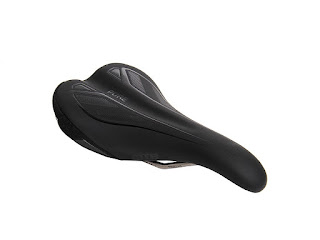
If you are having a hard time find a happy place on your saddle, Vector Cycle Works offers free saddle testing.  The best way to determine if a saddle will work for you is to sit on it!

A saddle test session usually starts off with a quick conversation about your issues and type of riding, a couple of measurements, and then we set up the test bike based on your current bike geometry.  A BikeFit SwitchIt (as shown in the picture above) allows us to change saddles and adjust them quickly - it's not uncommon to go through 20-25 saddles in a saddle testing session, trying to find that one that really feels good.  We can quickly swap saddles and tweak position and angle to get immediate feedback.  Once we find a saddle you like, we'll mount it on your bike for an extended test.

If you are experience discomfort or numbness, and are ready to try something new, you can click here to schedule your free saddle testing session!

Vector Cycle Works is an authorized dealer for several brands including Brooks, Chromag, Cobb Cycling, Fi'zi:k, ISM, Profile Design, Selle Royal, SQlab, and WTB.  Inventory is kept to a minimum, but we can order in other models or colors, as needed.  There are currently over 80 saddles available for testing and there are more coming soon.

This isn't a complete list, but here are some of the saddles that are currently in stock and ready for a test ride:

Chromag Juniper 

Chromag Lynx DT

Chromag Trailmaster DT 

Cobb Fifty-Five
Cobb Gen2

Cobb Max
Cobb Plus
Cobb Plus 2

Cobb Plus DRT

Cobb Randee

Cobb SHC

Cobb SHC DRT

Cobb VFlow

Fi'zi:k Aliante VS

Fi'zi:k Antares VS

Fi'zi:k Arione VS


Fi'zi:k Mistica
(Regular and Large)
Fi'zi:k Vesta
ISM PL 1.0

ISM PL 1.1

ISM PN 1.0

ISM PN 1.1

ISM PN 2.1

ISM PN 3.0

ISM PR 1.0

ISM PR 2.0

ISM PR 3.0

ISM PS 1.0

ISM PS 1.1 

ISM Road
Profile Design Vertex 80 TT
Selle Royal Scientia Series
(Three Models/Widths: A1, A2, and A3)
SQlab 611 Ergowave Active Series
(4 widths: 12cm, 13cm, 14cm, 15cm)
WTB High Tail Series
3 Levels: Pro, Team, Carbon
WTB Pure Series
5 Levels: Comp, ProGel, Race, Pro, Team

WTB Rocket Series
5 levels: Comp, Race, Pro, Carbon, Team
3 widths: 130mm, 142mm, 150mm

WTB Silverado
3 Levels: Pro, Team, Carbon

WTB Speed
4 Levels: Comp, ProGel, Pro, Team

WTB Speed She
2 Levels: Comp, ProGel

WTB Volt
5 Levels: Comp, Race, Pro, Team, Carbon
3 Widths, depending on level: 135mm, 142mm, 150mm


Tuesday, April 11, 2017

Sharing the BikeFit Love


The Vector Cycle Works studio had a bit different feel this weekend - it is still all about getting people more comfortable on their bikes, but this time there were 4 fitters in the room.

I am a BikeFit Instructor, and hosted a BikeFit Level 1 class of 3 students at the studio/my home this weekend.  Level 1 is an intense two days of a little lecture with a lot of hands-on training.  The main objective is to help fitters establish a good foundation for a bike fit by focusing on the foot/pedal interface.  


The first day, we go over the details of cleat placement and the various tools that BikeFit provides to improve the rider's connection to the pedal.  The foot/pedal interface is often overlooked as part of the fit, yet so important for mechanical efficiency and comfort.  Poor cleat placement can manifest itself where you might not expect it.  We take the time to understand how to assess, measure, and implement appropriate accommodations for a rider.  Our students become the test subjects on this day, getting an opportunity to gain experience with each other and different pedal systems.  

Sometimes, in a class like this, things will go pretty smoothly and you get some relatively straightforward people.  That's no fun!  We had some interesting things going on, and that was great - the students got experience with different wedge options, use of pedal spacers, use of leg length shims, and got to see some things that might be a bit counter-intuitive.  We also got to work with Speedplay, Look, Shimano, and Crank Bros. pedal solutions over the weekend.  Each has their nuances, so it's good to get that variety.

For day 2, we take it a bit further and look at the total bike fit, focusing on the contact points on the bike.  We had two victims, err, subjects come in to give the students an opportunity to fit someone with very little background information.  We had a young triathlete with a new-to-him triathlon bike, and a mountain biker who had just built up his brand new full suspension 29er.  Essentially a couple of clean slate fits.  The students get the opportunity to figure out what questions to ask, how to ask them, and how to hone in on the main focus points for the rider.  I tend to step back, observe, and interject as needed.


The students were from northern Indiana, northern Ohio, and the Boston area.  I like keeping the class small for maximum interaction and 3 was just right.  It was a great group of guys and we had a lot of fun.  While class goes from 9-5 with an hour for lunch, a couple of the guys stayed until around 8:30 on Saturday night, where we chatted about all sorts of things related to cycling, fitting, the bike industry, human movement, and anything else that came up.  It's great to see the passion in others.

When I teach, I can't help but reflect on my experience as a fitter.  I love what I do, and love sharing the knowledge.  Riding a bike should be a wonderful thing, and helping people experience that without pain is what makes me tick.  It seems like ages since I was on the other side of the classroom, taking in everything I could from some really top-notch people (teachers and fellow students) who have been a positive influence on my life and have helped shape my style.  The students in this class have very different backgrounds and fit experience (from no experience at all to 10 years of fitting), and each had their own learning style.  As they get the chance to practice, they will develop their own fitting style, as well.  BikeFit is one of many bike fitting protocols, but it's a very effective one, and should provide a great foundation for the students.  I look forward to keeping in touch with them and hearing of their fitting successes.

If you are interested in learning about becoming a BikeFit-certified pro bike fitter, you can read more here.  I will be hosting another BikeFit Level 1 class November 4-5.

Hunter does not approve of your fit.
We will work to make it better...


Friday, December 23, 2016

2017 Vector Cycle Works Services - Introducing CoreFit


As the new year approaches, it is time to revisit the services offered at Vector Cycle Works.  2016 has been a great year in the studio, and I'm always thankful for all the great people I meet.  As my knowledge and processes have evolved, I felt it was time to update my services accordingly.

ForeverFit is the cornerstone of what I do.  It's a very thorough deep-dive into understanding the human body and how it interacts with the bike.  It is also about a 3 1/2 to 4 hour initial session.  That amount of time is not for everybody and it also limits my availability, as I can't do a ForeverFit on weeknights.  I don't feel right making people wait as much as 8 weeks to get in.  I've pointed about 20 people to other fitters in the area this year because they couldn't get in soon enough.

One other important philosophy I hold is that cycling can be for everyone.  One challenge for bike fitters is that we are a cottage industry within a niche industry.  I am an evangelist for cycling and healthy living before I am a fitter.  What percentage of the general population actually own a bike?  How many of them ride it regularly?  How many of them have actually been fit, or see the value in being fit?  How much are they willing to pay for a fit?  As we ask these questions, the size of the market gets smaller.

I want to see more people having fun on bikes.  I don't want the cost of bike fitting to prevent people from getting a fit.  I have always felt it should be affordable.  So, in an effort to be more available to more people, I am introducing a new fit service: CoreFit.  I think CoreFit helps round out the services at Vector Cycle Works - providing comprehensive services for the cyclist looking to get more out of their experience.

With all that said, here is the new menu:

RightBike - $100

RightBike is the Vector Cycle Works sizing service.  This is the "pre-fit" for someone looking to purchase a new bike.  RightBike is based on F.I.S.T. protocols where we find the best bike solution for your body.  As I covered in a couple of previous blog posts (found here and here), the days of walking into a store and having the salesperson guess your size based on your height are over.  With RightBike, we'll put you on a fit bike, work through a series of trials, and then let you decide what feels best.  We do some measuring, a little math, and you get a list of all the bikes that work for you, with any adjustments that need to be made.  We aren't trying to hack together a bike and make it work - you deserve an elegant solution that fits well, is comfortable, handles well, fits your budget and looks good, too.  While I am a dealer for a few brands of bikes, I believe in putting your comfort, efficiency, budget, and tastes first, so the list includes all the bikes available in the central Indiana area from the local bike shops, as well as online sellers.

The cost of RightBike can be applied to a subsequent CoreFit or ForeverFit.  So, in a perfect world, you get sized up, buy the bike that fits you best, and come back to iron out the details with a proper fit.  In my opinion, this is the best way to buy a bike.

CoreFit - $150

CoreFit, as the name implies, gets back to core fit technologies to get you comfortable and efficient.  Based on BikeFit and F.I.S.T. protocols, a typical CoreFit session typically takes about 2 hours for the initial fit.  We will gather some basic measurements of your body and feet, dial in your overall geometry and interaction with the bike, and put the icing on the cake by spending time on your foot-pedal interface.  1 follow-up session is included.  CoreFit is guaranteed - if you're not happy, you get your money back.

ForeverFit - $300

ForeverFit is the ultimate comfort and performance partnership.  Building on CoreFit, ForeverFit incorporates Functional Movement work to dive deep into understanding your deficiencies and asymmetries so we can understand what is holding you back from performing at your highest level.  ForeverFit is guaranteed for as long as you own the bike, and also offers a 100% money back guarantee if you're not happy.

If you choose to do a CoreFit and later decide you want to upgrade to gain the benefits of ForeverFit, you can do so for the cost difference.

Once you have been fit on one bike, a subsequent bike is $100 for CoreFit or ForeverFit customers.

Functional Movement Training - $50 per hour

If you are looking to get more from your cycling experience, you may want to look at how well you move.  To perform well as an athlete, we need to be mobile, stable, and strong.  A Functional Movement Screen and Y-Balance test are part of ForeverFit, but can also be done separately.  With Functional Movement, we screen and measure your deficiencies, and work together to develop a training plan designed specifically to overcome those deficiencies without preventing you from your normal training.

Whether you are dealing with pain, nagging injuries, or just looking to get a few more watts on the bike, Vector Cycle Works can help you find a better you.


Saddle Testing - FREE

A bad saddle can keep you from spending time on the bike.  Don't waste time with the wrong saddle - try one of over 70 saddles available for testing at Vector Cycle Works.  Testing is free.  Bring your riding attire, shoes, and bike in and we'll find a saddle that works better for you, mount it to your bike, and let you take it home to try for a longer trial.  There is no reason to be uncomfortable on your saddle anymore.

Other Stuff

In addition to services, Vector Cycle Works is able to provide expertise on many other aspects of cycling, including:

  • Bike components - Vector Cycle Works has a wide variety of bike components from handlebars to wheels.  All components include free installation.
  • Power meters - Vector Cycle Works is a Power2Max Competence Center and will gladly discuss the power meter market.  A power meter purchase includes free installation and batteries for the life of the power meter.
  • Trainers - Indoor training is one of my favorite subjects.  If you are interested in getting more out of your indoor cycling experience, Vector Cycle Works is an authorized dealer for Wahoo, Tacx, Kinetic, Elite, and CycleOps trainers.  All trainers include free delivery and setup in your home (in the Indianapolis area).
If you are ready to make next season your best season ever, you can schedule time at Vector Cycle Works at https://vectorcycleworks.appointlet.com.  If you're still unsure, call Travis at 317-833-0702 for more info and we'll figure out what is best for you.  Thank you for your consideration, and I look forward to seeing you soon!

Saturday, August 20, 2016

When 54 Does Not Equal 54: Part 2


A while ago, I posted some thoughts regarding the variation in the sizes of bikes that are labeled as being the same size.  Many manufacturers offer bikes in sizes like 51, 54, 56, 58, etc., but that doesn't really paint an accurate picture of how well the bike will actually fit you.  As an advocate of a "fit first" approach to buying a bike, I feel it is important for my customers to understand that if a size 54 from Brand X fits them, that doesn't necessarily mean that a 54 from Brand Y will work, too.  A different model from Brand X might not even fit.  So, in this "Part 2", I thought it might be helpful to look at some actual data.

I maintain a list of bikes and all of their geometry information and use this data when helping customers find the right bike for them.  The bikes in this list include most of the bikes available from several of the local bike shops in Indianapolis.  There are currently 14 brands represented, and I am always adding more as new models are introduced and time permits.  The 2017 models are starting to be introduced, so it's time to start hammering away at adding more to the list.  This is what bike geeks do for "fun."

The purpose of this exercise is to get a visual of the range of bike sizes that exist within a given size label.  Using a designation such as 54 just doesn't give us the best picture.  The better picture is painted using stack and reach, a concept developed by Dan Empfield and which has gained traction with the manufacturers over time.  Most of the manufacturers now publish stack and reach numbers on their websites.  I've actually run into a couple who still haven't jumped on board with this, and it makes it very difficult to compare two bikes.  I love the simple elegance of stack and reach.

We will pick on size 54 today, since it is fairly common.  Bike sizing conventions introduce a lot of variables.  Some manufacturers might opt for a different naming convention such as XS, S, M, L, XL.  Some brands may have only a handful of sizes per model, while others, like the Trek Madone, can have up to 9 sizes.  We also have the concept of geometric classifications such as "endurance", "race" or "women's" geometry.  These exist based on the intended use and market, and other classes exist based on the type of riding, such as gravel, adventure, or cyclocross.  These are all essentially drop bar road bikes.  We'll look at these by their intended use/market, and then see what happens when we combine everything together.

Road Race Bikes
We'll start with the classic race geometry.  These are the Trek Madones, Cannondale SuperSixes, and Specialized Venges that you see under the Grand Tour riders.  These are the bikes you might think you can't ride because you're "too old," "too inflexible," or "want something more comfortable."  The reality is, these could fit you, but you won't know until you are properly sized up.  Let's see what happens when we plot these based on their stack (Y) and reach (X) numbers:

Road Race Geometries
(click on the image for a bigger view)
Before getting too deep, let's define what we're looking at here.  The X axis of the graph (horizontal) corresponds to the reach of the bike, which is also the X axis of the bike.  As you move to the right, the bike gets longer, while moving left, the bike gets shorter.  The Y axis of the graph (vertical) corresponds to the stack or vertical height of the frame.  as you move down, the bike is lower, and as you move up, the bike is taller.  So, the term "shorter" is a bit confusing, but I will use that to refer to the length of the bike rather than the height.  Additionally, these aren't necessarily scaled perfectly where one mm of stack is perfectly aligned with 1mm of reach, but I hope this will give an idea of the ranges involved.

Looking specifically at the race geometries, we can see quite a bit of variance.  Looking first at the horizontal differences, we have size 54 road race bikes that have a reach of as short as 376mm and as long as 390mm - a range of 14mm.  This is where you might find some overlap with sizing up or down - that shorter bike in a 56 might still be shorter than the longer 54 bike.

Looking at the stack, we have even more range - the lowest bike has a stack of 526mm, while the tallest bike has a stack of 565mm - a difference of 39mm.  That's pretty significant.  We can see that we have some bikes that are long and low, which is what you might expect from a road race bike, while others are tall and short.  In this case, the longest, lowest bikes are the Trek Emonda H1 and the Felt F1 (the two dots down in the lower right corner of the graph).  The tallest bikes aren't necessarily the shortest, with the Scott CR1 being the tallest in this group, with the Jamis Xenith being the horizontally shortest of the group.


Endurance Bikes
Next up are the endurance bikes, the geometry that I have more people specify they "need" than any other.  Marketing has led us to think that upright = more comfortable, but once again, this is where a proper sizing may change your mind.  Nonetheless, let's take a look at our selection:

Endurance Bikes
(click on the image for a bigger view)
Here, we can see quite a range, both horizontally and vertically.  Horizontally, the reach is as short as 362mm and as long as 385mm - a 23mm spread.  Vertically, the stacks vary from as low as 552mm and as high as 597mm - a difference of 45mm.

I think where this gets interesting is if you combine the race and endurance geometries together into one chart to see how they trend:

Race and Endurance Bikes Combined
(click on the image for a bigger view)
Once we combine these two types of bikes, we can see that we have a wide variety of bikes called 54. Horizontally, these bikes span 38mm, with the shortest bike being the Jamis Quest and the longest being the Trek Emonda H1.  It's interesting that the shortest two bikes in each category are from Jamis.  The longest endurance bike is the aluminum Fuji Sportif.  The Sportif is a bit tall, and if you look at the Felt Z series, you will see these are almost as long as the Sportif, but lower.  You can see a pretty clear separation of the race and endurance geometries, with some bikes that cross over - the Felt Z series is longer and lower than some of the race bikes.

Women's Bikes
For fun, let's look at a few women's bikes.  The women-specific cycling industry has been on the verge of taking off for what seems like about 30 years now.  For the most part, we're still in "shrink and pink" mode - offer some smaller sizes with some pink touches, and it's good enough.  That concept isn't necessarily reflected here, since we are looking at just one size.  So, what do we see when we add in the women-specific size 54s?  Let's look at the race geometries first:

Men's and Women's Race Bikes Combined
(click on image for a bigger view)
A couple of things stand out here:  First, there are only 4 size 54 women's-specific race bikes offered by the 14 manufacturers in this list.  They happen to be from two manufacturers: Cannondale (CAAD10 Women's and Cannondale SuperSix EVO Women's) and Trek (Emonda Women's and the Trek Madone Women's).  I need to look at my list - there may be more out there, but I might not have added them yet.  I would think Liv would be listed here, and this may be an oversight on my part.

Second, with our small selection of women's race bikes, we can see they tend to be a bit more upright and shorter than the men's (or unisex) race bikes.  That is also not necessarily a bad thing when we take into "normal" human proportions and saddle issues.  But, that doesn't mean every woman has a short torso and long legs.  Nonetheless, if we look at the women's race bikes we do have, these are trending towards the endurance geometries.  So, let's look at the Women's endurance geometries and how they fit into the men's endurance bike world:

Men's and Women's Endurance Bikes
(click on image for a bigger view)
You can see a couple of things here - first, we have a few more women's endurance bikes to pick from, and second, they still trend shorter and taller than the men's versions.

That really leads to a discussion about how appropriate and effective women's bike sizing is.  That sounds like some good material for a future blog post.  From what I've seen, there are a couple of assumptions about women that lead to the trends we see here.  There is an assumption that women tend to have longer legs and shorter torsos.  I don't believe that to be 100% true or as extreme as it might be perceived, but I will need to do some research.

Another assumption gets into the female genitalia.  Part of what makes us different is why saddles cause us problems.  The pressure points that cause men and women grief are different, and in women's case, can make it more difficult to rotate the pelvis appropriately.

Let's Add Cyclocross to the Mix
Finally, let's look at cyclocross bikes.  'Cross bikes have some different considerations that go beyond the practicality of fit - we have to take into account the race format itself.  The cyclocross race format is short, intense, often muddy, requires a lot of getting on and off the bike, and involves shouldering and carrying the bike.  Speeds are relatively low compared to a grand tour or crit, so aerodynamics are less important than making power or maintaining traction.  So, the frames are a bit different.  When I fit a CX bike, the fit is different.  I will use the road sizing, but then generally take the bars up and back a bit, and maybe lower the saddle a bit for ease of getting on and off.  Overall, it's just a bit different - a few millimeters on the seat, and a centimeter or so in each direction on the bars.  We can see how cyclocross bikes look if we just mix them in with the rest:

Race, Endurance, Women's, and Cyclocross All In One
(click on the image for a bigger view)
As it turns out, our 'cross bikes seem to mix in all over the place - mostly right in the middle of the endurance geometries, with a few dropping down into the race geometries.  I'm not quite sure what this tells us, other than maybe the few manufacturers that I have in the list can't seem to decide where CX bikes live.  Maybe as I add more bike brands and new models are introduced in the future, we'll start to see a more distinct pattern here.

Conclusion
I don't know if this discussion will help anybody at all, but I found it fascinating to see what happens when we start looking at the variety of sizes within a stated size.  In the future, I hope to continue to look at how geometries align.  There are a few things that fascinate me about this, including how sizes may cross over (i.e. Brand X's 58 is shorter than Brand Y's 54), what the deltas between sizes tend to be, and then delving into how brands equip the bikes by size - what the crank arm length tends to be by size, handlebar width trends by size, trends over time, etc.  If you made it this far, I hope that you will consider be sized properly by a fitter before your next bike purchase.  Don't make a $5,000 mistake.

Bike sizing is available by appointment at Vector Cycle Works.  Schedule now at www.vectorcycleworks.com/contact.